ChakraSamhita and the Leadership Shift from Motivation to Clarity
Why inner regulation, not constant motivation, is emerging as the most critical leadership skill in high-pressure environments.
Leadership conversations today are saturated with words like motivation, agility, growth, and performance. Yet across organisations, a quieter and more serious challenge is surfacing. Leaders are not short of intent, effort, or ambition. What they are increasingly struggling with is clarity.
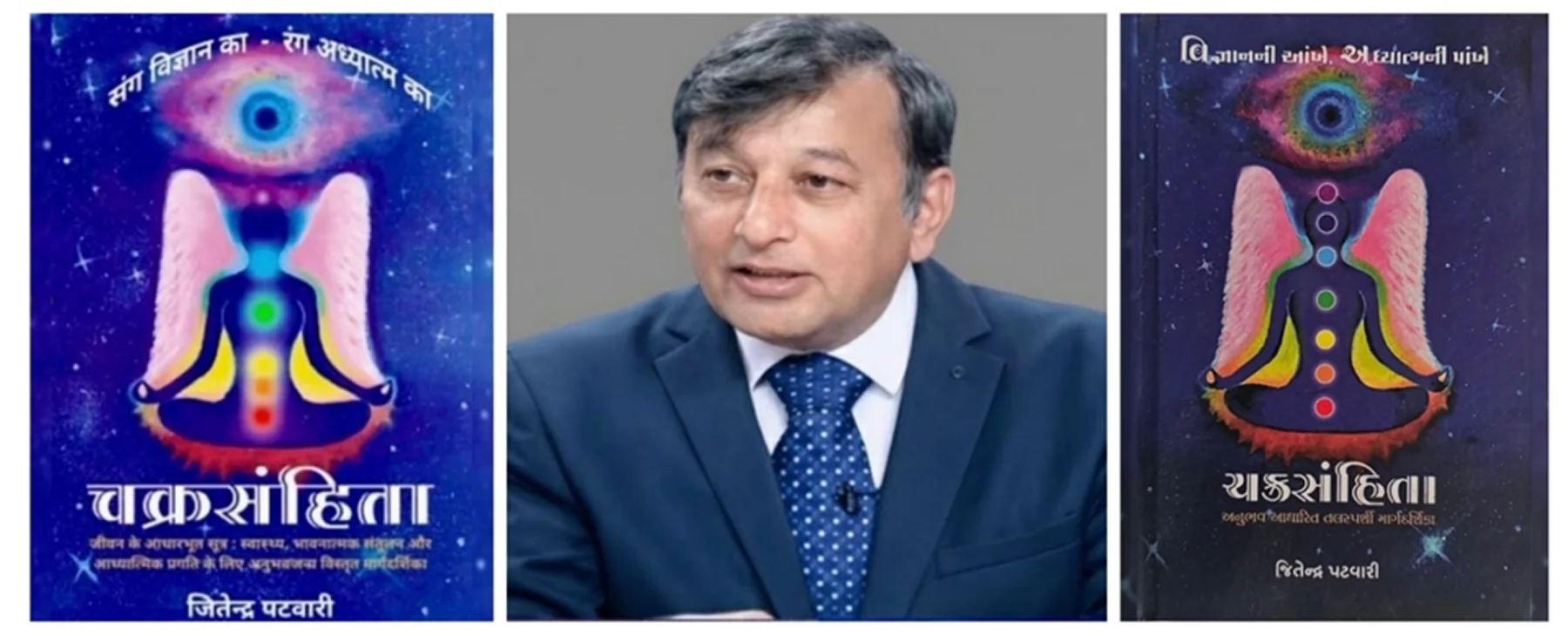
Decision fatigue, emotional overload, and continuous context-switching are steadily eroding judgment. Leaders find themselves reacting faster but deciding poorly. In such an environment, frameworks that help regulate inner state are becoming as important as strategic tools. This is where ChakraSamhita is drawing attention, particularly among professionals who value clarity over hype. ChakraSamhita is currently available in Gujarati and Hindi. An English edition is forthcoming.
ChakraSamhita does not present chakras as spirituality or belief. It treats them as functional reference points for understanding how pressure, responsibility, and emotional load affect leadership behaviour. The book depicts a simple observation. Leadership is not only about skill. It is about internal stability under pressure.
At a functional level, leadership consistently demands three capacities. Grounded decision-making, clear communication, and balanced emotional response. When these are compromised, performance suffers regardless of experience or intelligence. The chakra framework maps these capacities with striking simplicity.
Instability at the base level often shows up as insecurity, micromanagement, or excessive control. Stress in the throat centre appears as communication gaps, avoidance of difficult conversations, or inconsistent messaging. Imbalance around the heart manifests as disengagement, emotional withdrawal, or overreaction to criticism. ChakraSamhita treats these not as personal flaws, but as signals.
This reframing is important. Instead of blaming personality or competence, leaders are encouraged to notice where pressure accumulates internally before it distorts behaviour. The shift is subtle but powerful. Leadership moves from constant output to intelligent regulation.
What distinguishes ChakraSamhita is restraint. It does not promise peak performance, emotional mastery, or permanent calm. It positions awareness as a hygiene practice. Just as physical fitness requires maintenance, inner clarity requires attention. This approach resonates strongly with leaders fatigued by motivational excess and performance rhetoric.
The credibility of the framework comes from long-term applied work. The author, Dr Jitendra Patwari, brings over 25 years of experience in meditation, psychology, and leadership-oriented self-regulation. His research culminated in a world-first PhD in Chakra Healing, conducted with UN-affiliated academic backing. This academic grounding gives structure without overwhelming the reader.

Dr Patwari’s work has also received national recognition. He was acknowledged by The Hans India as one of India’s “Top 10 Icons of Impact”, highlighting the relevance of his work in contemporary professional and social contexts. Yet the book itself avoids personal spotlight. Its focus remains on application.
In practical terms, ChakraSamhita encourages leaders to slow down internally, even when the external pace cannot slow. Practices such as brief breath awareness, posture correction, sound, and reflective pauses are introduced as tools to restore clarity, not rituals to perform. These practices are designed to fit into boardrooms, meetings, and daily work life.
In a business environment defined by uncertainty, leaders who can regulate their inner state gain a quiet advantage. They listen without defensiveness. They communicate with steadiness. They decide without urgency. Over time, this clarity becomes contagious, influencing team culture and organisational health.
As leadership evolves from command to coherence, clarity may well become the most valuable skill of all. ChakraSamhita offers a language to understand and cultivate this clarity without jargon, belief, or exaggeration.
About the Author
Dr Jitendra Patwari is a wellness guide, author, and speaker with over 25 years of experience in applied meditation and mind–body leadership frameworks. He holds the world’s first PhD in Chakra Healing, backed by UN-affiliated academic institutions, and is recognised nationally for his contribution to practical wellbeing education.
Contact Information
- +91 79845 81614
- jitpatwari@rediffmail.com