
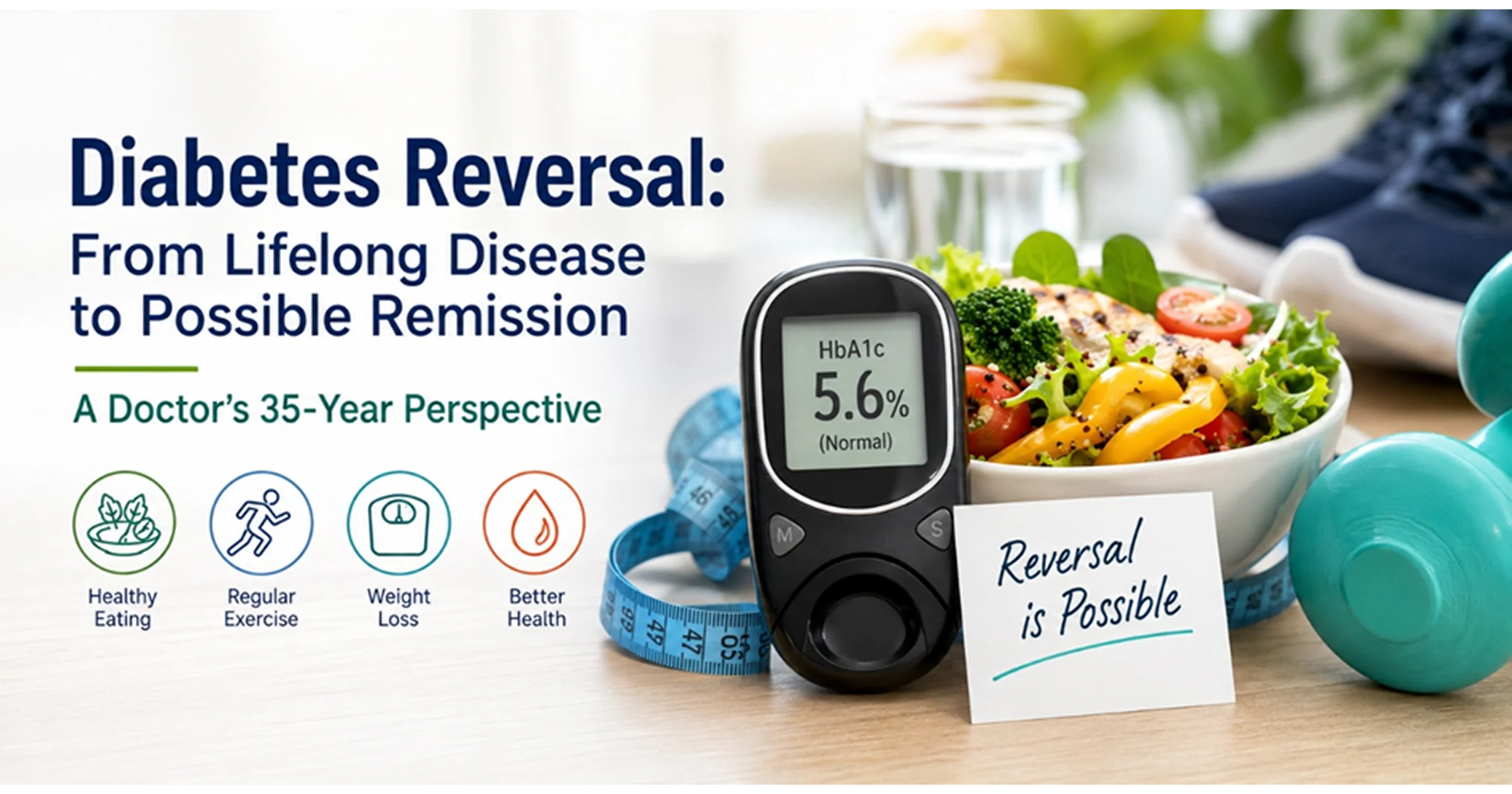
Diabetes Reversal: From Lifelong Disease to Possible Remission — A Doctor’s 35-Year Perspective
By Dr. Tapas Kumar Koley, HOD & Consultant Internal Medicine at Manipal Hospital Dwarka, Delhi
For most of my medical career, diabetes was taught as a one-way diagnosis. Once a patient developed type 2 diabetes, the assumption was simple: medications would increase over time, complications were likely, and insulin was often inevitable.
Today, that narrative is changing.
Modern research—and real patients in my clinic—have shown that type 2 diabetes can be reversed or put into remission in a significant number of people, especially when addressed early and correctly. This article explains what diabetes reversal truly means, who it works for, how it happens, and why medical supervision is essential.
Understanding Diabetes: Why Reversal Is Possible
There are two main types of diabetes:
• Type 1 diabetes, an autoimmune condition where the body destroys insulin-producing cells. This type is not reversible.
• Type 2 diabetes, which accounts for 90–95% of all diabetes cases, is driven primarily by insulin resistance and excess fat accumulation in the liver and pancreas.
It is type 2 diabetes—the lifestyle- and metabolism-driven form—that offers the possibility of reversal.
Globally, diabetes has reached crisis levels. According to the World Health Organization, more than 537 million adults worldwide are currently living with diabetes, and the number continues to rise. Even more concerning is that millions are undiagnosed, silently progressing toward complications.
What Does “Diabetes Reversal” Actually Mean?
In medical terms, diabetes reversal—often referred to as remission—means:
Maintaining normal blood sugar levels (HbA1c below 6.5%) for at least 3–6 months without diabetes medications.
Major medical bodies such as the American Diabetes Association acknowledge remission as a valid clinical outcome, while emphasizing that ongoing monitoring remains essential.
Reversal does not mean:
• You are “cured”
• You can return to old eating habits
• Follow-up care is no longer needed
It means the disease is biologically quiet, as long as healthy habits are maintained.
The Science Behind Diabetes Reversal
Type 2 diabetes develops when excess fat interferes with insulin’s function:
• Fat in the liver blocks insulin’s ability to control glucose production
• Fat in the pancreas impairs insulin secretion
When this fat is reduced—often through weight loss—insulin sensitivity improves and blood sugar levels can normalize, sometimes within weeks.
Research shows that even 5–10% weight loss can significantly improve insulin resistance. The effect is strongest in people diagnosed within the last 5–6 years.
Proven Paths to Diabetes Reversal
1. Nutrition-Based Weight Loss
• Calorie-controlled diets
• Low-carbohydrate or Mediterranean-style eating
Clinical trials show up to 46% remission at one year with intensive dietary programs.
2. Physical Activity
• At least 150 minutes of moderate exercise per week
• Improves insulin sensitivity even without weight loss
Lifestyle interventions reduce diabetes progression by up to 58%.
3. Metabolic (Bariatric) Surgery
• Most effective option for patients with obesity and long-standing diabetes
• Produces rapid and durable remission in many cases
Who Is Most Likely to Reverse Diabetes?
Best candidates typically:
• Were diagnosed within the last 5–6 years
• Are not yet insulin-dependent
• Have significant abdominal (visceral) fat
• Can sustain lifestyle changes with support
The earlier diabetes is addressed, the more reversible it becomes.
Myths and Dangerous Misinformation
As diabetes reversal gains attention, misinformation has exploded online.
Common myths include:
• “One diet works for everyone”
• “Stop medications immediately”
• “Once reversed, diabetes is gone forever”
These claims are not only false—they can be dangerous.
Medication adjustments should always be done under medical supervision. I have seen patients hospitalized after stopping drugs based on internet advice.
The Bottom Line: Hope with Responsibility
After three decades in medicine, I can say this with confidence:
Diabetes reversal is real—but it is not automatic, universal, or effortless.
It requires:
• Early diagnosis
• Evidence-based interventions
• Medical supervision
• Long-term commitment
For many patients, however, the reward is life-changing: fewer medications, fewer complications, and renewed control over their health.
The conversation around diabetes is no longer just about management.
It is about possibility, prevention, and reclaiming health—one patient at a time.